The Green Balance Sheet: Making a Measurable Financial Case for Living Walls in Scottish Business

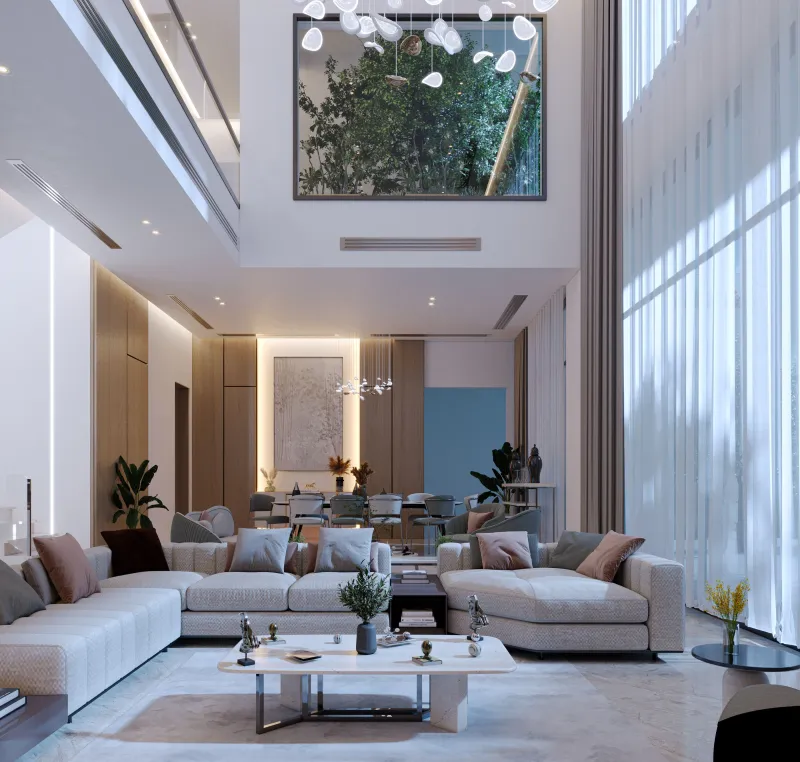
Photo: modern Scottish office interior with living wall green plants business professionals, via i.pinimg.com
For too long, living walls have been filed under 'brand enhancement' in corporate budgets—a line item justified by aesthetics rather than accountability. That narrative is shifting. Across Scotland's commercial landscape, a growing cohort of business owners, facilities managers, and sustainability leads are approaching vertical greenery not as decoration, but as infrastructure with a calculable return on investment. The question is no longer whether living walls look impressive. The question is: what do they actually deliver?
Reframing the Conversation: From Cost to Capital
The instinct to treat a living wall as an expenditure rather than an asset stems from how we categorise it at the point of purchase. A bespoke modular installation, complete with integrated irrigation and ongoing horticultural maintenance, carries a visible upfront cost. What is far less visible—and therefore far less frequently costed—is the cumulative financial benefit accruing quietly in the background.
Property consultants working across Edinburgh and Glasgow have noted that commercial spaces featuring professionally installed biophilic elements, including living walls, command measurable rental premiums. Studies from comparable markets across the UK suggest uplift figures of between 6% and 15% on commercial lease values for buildings with credible green credentials. In a city such as Edinburgh, where Grade A office space commands premium rents, even a conservative uplift at the lower end of that range can represent a substantial return over a standard lease term.
For business owners rather than landlords, the calculus shifts—but does not diminish.
The Productivity Dividend
Perhaps the most compelling figure in the living wall investment case is one that rarely appears on a facilities budget: the cost of human underperformance. Research from institutions including the University of Exeter and the World Green Building Council has consistently demonstrated that workplaces incorporating natural elements—plants, natural light, and living surfaces—generate measurable gains in employee cognitive function, focus, and reported wellbeing.
The figures are striking. Some studies cite productivity improvements of up to 15% in environments with significant biophilic design elements. For a Scottish professional services firm with, say, 40 employees earning an average annual salary of £35,000, a 10% productivity gain across even half the workforce represents a financial value that dwarfs the cost of a living wall installation many times over.
One Edinburgh-based architecture practice that installed a 12-square-metre interior living wall in their studio reported a marked reduction in sick days taken in the 12 months following installation. While attributing causation with precision is difficult, the correlation aligned with broader research linking indoor plant matter to improved air quality and reduced airborne particulates—both established contributors to respiratory health and, by extension, workplace attendance.
HVAC Efficiency and the Energy Equation
Scotland's climate is rarely associated with cooling costs, but the reality of modern commercial buildings—heavily glazed, densely occupied, and increasingly subject to urban heat island effects—means that temperature regulation is a growing operational concern, particularly in Aberdeen and Glasgow city centres.
Exterior living walls act as a thermal buffer. The layer of vegetation and growing medium insulates the building envelope, reducing heat gain in summer and heat loss in winter. Independent thermal performance assessments have found that buildings with substantial exterior green walls can reduce HVAC energy consumption by between 5% and 20%, depending on orientation, plant species, and installation depth.
For a mid-sized commercial building with annual energy costs of £40,000, a conservative 8% reduction represents a £3,200 annual saving. Over a ten-year period—a reasonable planning horizon for any commercial property decision—that figure approaches £32,000, exclusive of energy price inflation. When projected against the installed cost of an exterior system, payback periods of eight to twelve years become realistic for appropriately specified installations.
Employee Retention: The Hidden Multiplier
Recruitment costs are among the most underappreciated line items in a business's operational expenditure. The Chartered Institute of Personnel and Development estimates that replacing a mid-level employee in the UK costs between £3,000 and £12,000 when recruitment fees, onboarding time, and lost productivity are aggregated.
Workplace environment is consistently cited as a factor in employee satisfaction and retention decisions. Businesses that invest demonstrably in their staff's physical surroundings—and living walls are among the most visible such investments—are increasingly able to leverage that commitment in recruitment and retention conversations. In competitive talent markets such as Edinburgh's technology and financial services sectors, or Glasgow's creative industries, the marginal advantage of a genuinely considered workplace environment should not be dismissed.
If a living wall installation contributes to retaining even one mid-level employee who might otherwise have left, the financial case is effectively self-funding.
Building Your Own Business Case
For business owners preparing to present a living wall proposal to a board or investment committee, the following framework offers a credible starting structure:
Step 1 – Establish the baseline. Document current energy costs, staff turnover rates, sick day averages, and—where relevant—commercial rental values. These become your comparison points.
Step 2 – Quantify the applicable benefits. Not every business will realise every category of return. A retail space will weight footfall and dwell time; a professional services firm will prioritise productivity and retention; a commercial landlord will focus on yield and valuation.
Step 3 – Apply conservative multipliers. Use the lower end of published research ranges. Boards respond better to modest projections that are subsequently exceeded than to optimistic figures that invite scepticism.
Step 4 – Include maintenance in the model. A living wall is a living system. Professional horticultural maintenance, irrigation servicing, and periodic replanting are real costs that belong in the calculation—and which, when included honestly, still leave the investment case intact.
Step 5 – Consider the intangible but documentable. Brand perception, press coverage, planning goodwill, and ESG reporting value are genuinely difficult to quantify—but they are not zero. Noting them qualitatively alongside the quantitative case strengthens rather than weakens a credible presentation.
Scotland's Opportunity
Scotland's commitment to net-zero by 2045, its progressive planning framework, and its strong institutional culture around sustainability create a particularly fertile environment for the commercial living wall proposition. Businesses investing now are not merely responding to a trend—they are positioning ahead of regulatory and market pressures that will, in due course, make biophilic building features a baseline expectation rather than a differentiator.
The green balance sheet is not a metaphor. It is a spreadsheet waiting to be completed. And for Scottish businesses willing to do the arithmetic, the figures are increasingly compelling.