Walls That Breathe: The Surprising Wildlife Colonising Scotland's Vertical Gardens
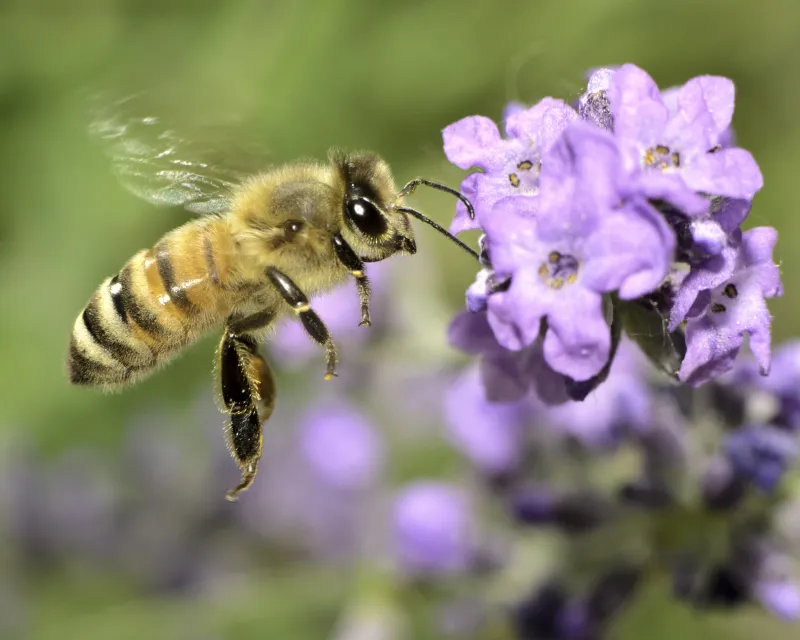
Photo: bees pollinators urban green wall vertical garden Scotland wildlife, via images.squarespace-cdn.com
The Habitat Hiding in Plain Sight
When a living wall is installed on a building, the conversation tends to focus on the human beneficiaries — the improved air quality, the aesthetic transformation, the thermal regulation. What receives considerably less attention is the parallel colonisation that begins almost immediately: the arrival of wildlife that recognises, in a vertical garden, something it has been searching for across a landscape increasingly hostile to its survival.
Scotland's urban and suburban environments are, ecologically speaking, fragmented places. Green spaces exist as islands — parks, gardens, and verges separated by roads, car parks, and sealed surfaces that offer little to the creatures attempting to navigate between them. Living walls, positioned as they are on the vertical planes of buildings, function as ecological stepping stones — patches of habitat suspended within the built fabric, connecting ground-level greenery to rooftop gardens, street trees to window boxes, and parks to one another.
Understanding which species are moving into these structures, and why, is not merely a matter of ecological curiosity. It carries significant implications for how we design living walls in Scotland — and for the conservation value we can extract from what might otherwise be regarded as simply an attractive architectural feature.
Pollinators: The First Arrivals
The most immediate and visible beneficiaries of living wall installations are Scotland's pollinating insects. Bumblebees, hoverflies, and solitary bees are among the earliest colonisers, drawn by the flowering species that form the visible layer of most well-designed installations.
Of particular conservation significance is the presence of solitary bee species in urban living walls. Scotland supports over 30 species of solitary bee, many of which are under pressure from habitat loss and the reduction of flower-rich margins in agricultural landscapes. Bee hotels and nest boxes attract attention, but a well-planted living wall offers something more fundamental: a sustained and diverse foraging resource within flight range of nesting sites.
Research from the University of Sheffield's Urban Flows Observatory has demonstrated that urban green walls planted with a diversity of flowering species — including lavender, echinacea, sedum, and native wildflowers — can support pollinator densities comparable to those found in managed meadow habitats. For cities such as Glasgow, where green space per capita remains among the lowest in the UK, this finding carries considerable weight.
Designing for pollinators in Scottish living walls requires attention to flowering succession — ensuring that something is in bloom from early spring through to late autumn, covering the active seasons of the widest possible range of species. Native and near-native plants such as heather, foxglove, and scabious are particularly valuable, offering both nectar and pollen in forms that Scotland's native bee populations have evolved to exploit.
Invertebrates: The Unseen Foundation
Beneath the visible surface of a living wall lies a far richer ecological community than most observers appreciate. The substrate layers, root systems, and moisture-retaining materials of a mature living wall installation create conditions attractive to a remarkable diversity of invertebrates — springtails, mites, beetles, and spiders among them.
These invertebrate communities are not incidental. They form the base of a food web that extends upward through the animal kingdom, supporting the insectivorous birds and bats that represent some of Scotland's most cherished urban wildlife. A living wall that harbours a healthy invertebrate population is, in functional ecological terms, a feeding station for species that would otherwise find little sustenance on a bare masonry surface.
Lacewings and ladybirds — both voracious consumers of aphids and scale insects — are regular inhabitants of established living walls, providing a biological pest control service that reduces the need for chemical intervention. This functional benefit is particularly relevant in hospitality or residential settings where chemical pesticide use is undesirable.
Birds: Unexpected Visitors to the Vertical Garden
Perhaps the most striking testament to the habitat value of living walls is the frequency with which birds have been observed nesting and foraging within them. Wrens, in particular, have demonstrated a notable affinity for the dense, sheltered structure of mature living wall installations — their preference for low, tangled vegetation translating naturally to the layered complexity of a well-established vertical garden.
In several documented cases across Scottish urban settings, blue tits and great tits have been observed systematically working their way across living wall panels in search of invertebrate prey — behaviour that mirrors their natural foraging on tree bark and dense scrub. Robins have been recorded exploiting the disturbed substrate around irrigation outlets, where earthworm activity occasionally concentrates near the wall's base.
For building owners, the presence of nesting birds within a living wall introduces a legal consideration worth noting: once a nest is established and active, it is protected under the Wildlife and Countryside Act 1981, which prohibits disturbance during the breeding season. This is not a reason to avoid living walls — quite the contrary — but it does argue for scheduling routine maintenance outside the March-to-August breeding window.
Designing for Maximum Ecological Value
The biodiversity potential of a living wall is not fixed at installation — it is shaped profoundly by design decisions made at the specification stage. Several principles have emerged from ecological research and field observation that can meaningfully increase the conservation value of a Scottish living wall.
Plant diversity is the single most important variable. A monoculture installation — however visually striking — supports a fraction of the invertebrate and pollinator diversity of a mixed planting. Aim for a minimum of ten to fifteen species across a single installation, combining flowering plants, grasses, ferns, and mosses to create structural and resource variety.
Include native and near-native species wherever possible. Scotland's native invertebrates have co-evolved with native plants over millennia, and the relationship between specific insect species and specific plant families is often highly specialised. Introduced ornamental species may provide nectar but lack the full ecological functionality of natives.
Incorporate structural complexity. Varied substrate depths, intentional gaps, and the inclusion of moss layers create microhabitats within the wall that support a broader range of invertebrates. A uniform, flat surface — however densely planted — offers less ecological variety than one with physical texture and depth.
Consider connectivity. A living wall positioned in isolation provides limited value compared to one that forms part of a connected green corridor — linking to a street tree canopy above, a planted verge below, or a neighbouring green roof. When specifying installations, consider the ecological context of the building and its surroundings.
Scotland's Living Walls as Conservation Infrastructure
The cumulative effect of Scotland's growing living wall estate is beginning to register at a landscape scale. Each installation, considered individually, represents a modest ecological contribution. Considered collectively — across the tenements of Glasgow, the commercial districts of Edinburgh, the high streets of Perth and Inverness — they represent something more significant: a distributed network of habitat threaded through the built environment, offering refuge, foraging, and movement opportunity to species that have been progressively squeezed from the wider countryside.
This is not a replacement for the conservation of Scotland's wild landscapes, its peatlands, its ancient woodlands, and its coastal habitats. But it is a meaningful complement to that work — a demonstration that the built environment need not stand apart from the natural world, but can, with thoughtful design, become part of it.
The wall that breathes is not a metaphor. It is a habitat. And it is waiting to be filled.