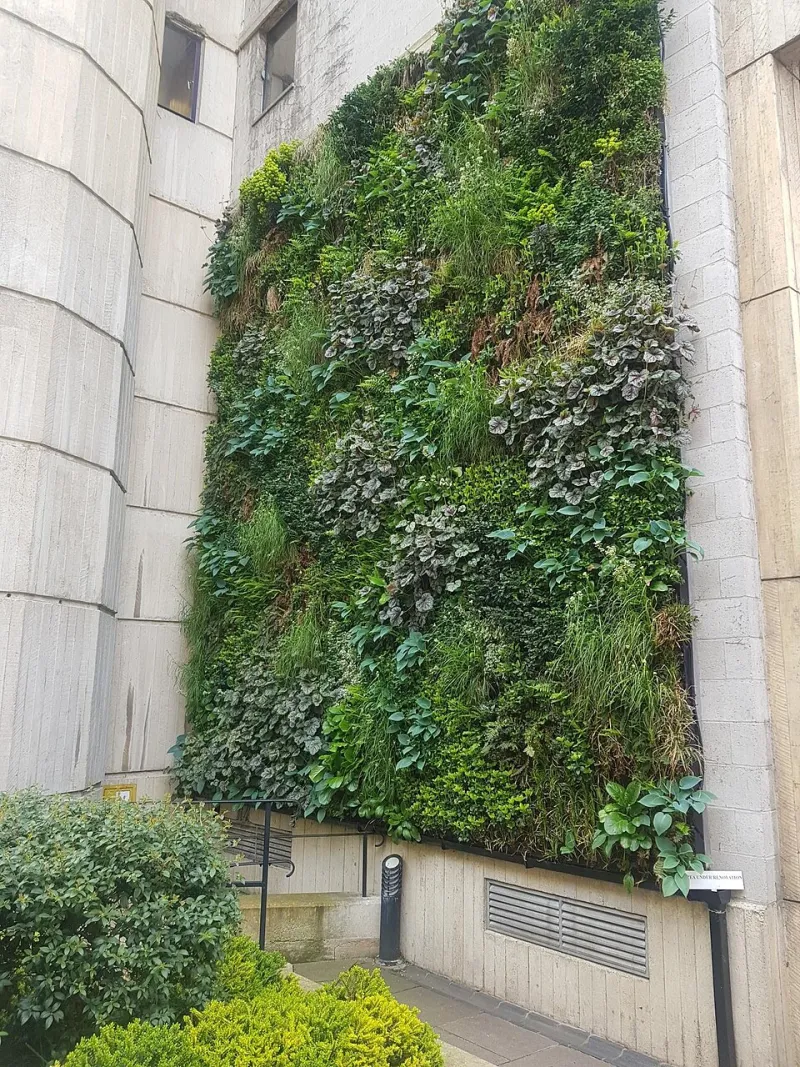
Grown Here, Thrives Here: The Case for Scottish Plant Sourcing in Living Wall Projects
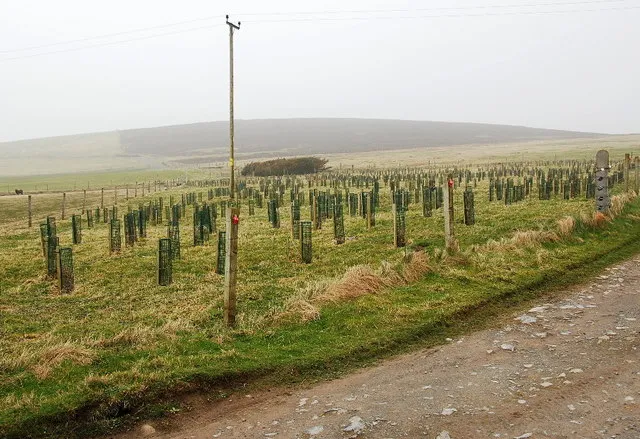
Photo: Ian Balcombe, CC BY-SA 2.0, via Wikimedia Commons
There is a quiet irony at the heart of some of Scotland's most celebrated green architecture projects. Schemes that proudly display their sustainability credentials — carbon reduction targets, BREEAM ratings, net-zero ambitions — occasionally arrive on site with plant stock that has travelled hundreds of miles from nurseries in the south of England, the Netherlands, or further afield. The plants look healthy enough at delivery. The question worth asking is: how long do they stay that way?
At Scotscape Living Walls, we have spent considerable time examining this question — not simply as a matter of environmental principle, but as a practical concern that shapes the long-term performance of every installation we undertake. The answers point consistently in the same direction: proximity of plant origin matters, and Scotland's own nursery sector has more to offer living wall projects than it is currently being asked to provide.
What the Climate Record Actually Tells Us
Scotland's climate is not merely 'colder than England'. It is characterised by higher annual rainfall, more persistent wind exposure, pronounced seasonal light variation, and — particularly in coastal and upland zones — conditions that can shift sharply within a single week. Plants cultivated in the relatively mild, drier conditions of southern English nurseries or continental growing facilities are not, as a rule, conditioned for these realities.
The process of acclimatisation — the gradual physiological adjustment a plant makes to its environment — takes time. When stock arrives from a climatically distinct origin and is immediately installed onto an exterior living wall in Edinburgh, Glasgow, or Inverness, it faces a form of environmental shock that can compromise root development, stress the plant's immune responses, and increase susceptibility to Scotland's fungal pressures. Mortality rates in the early establishment phase can be significantly higher than specifiers anticipate, and the remedial costs that follow are rarely factored into initial procurement decisions.
Scottish-grown stock, by contrast, arrives already attuned to the temperature ranges, precipitation patterns, and light levels it will encounter on site. This is not a marginal advantage — it is a foundational one.
The Nursery Relationships Worth Building
Scotland's horticultural sector is smaller than its English counterpart, but it is far from absent. From specialist growers in Perthshire and the Lothians to nurseries operating across Fife and the Borders, there is a network of producers cultivating hardy perennials, sedums, ferns, and ornamental grasses well-suited to vertical planting systems. The challenge has historically been one of connection rather than capacity: living wall contractors and their clients have not always known where to look, and Scottish nurseries have not always positioned themselves as suppliers to the green architecture market.
That relationship is beginning to evolve. Forward-thinking growers are increasingly engaging with the specifications demanded by living wall systems — modular planting densities, root structure requirements, consistent plug sizes — and some are actively developing growing programmes tailored to the sector. For project teams willing to engage early, ideally at design stage rather than procurement stage, there is genuine scope to co-develop plant palettes that are both locally sourced and precisely matched to the installation's performance requirements.
Building these relationships takes effort. It requires specifiers to move beyond the convenience of established national catalogues and invest in conversations with regional producers. But the payoff — in plant establishment rates, in reduced replacement cycles, and in the authenticity of a project's sustainability narrative — is substantial.
The Environmental Credentials Argument
For developers, occupiers, and investors seeking to substantiate green claims with auditable evidence, the provenance of plant material is increasingly relevant. Sustainability frameworks are becoming more granular in their scrutiny of supply chains, and the days when a living wall installation could be presented as inherently sustainable — regardless of how its components were sourced — are fading.
Local procurement reduces embodied transport emissions, supports regional economic activity, and shortens the supply chain in ways that reduce risk and improve traceability. These are not abstract virtues. They are measurable attributes that can be documented, reported, and verified — precisely the kind of evidence that ESG-focused investors and sustainability-conscious tenants are beginning to request.
For a business making the case internally for a living wall investment, the ability to say that plant stock was sourced from Scottish nurseries, cultivated in conditions analogous to the installation site, and transported a fraction of the distance typical of national supply chains, adds a layer of credibility that resonates with stakeholders well beyond the facilities management team.
Cost Considerations: A More Nuanced Picture
It would be misleading to suggest that locally sourced Scottish plant stock is always the least expensive option at the point of purchase. Some specialist species remain more readily available through established national or European suppliers, and volume pricing from larger southern nurseries can appear attractive on initial comparison. However, a whole-life cost assessment tells a more instructive story.
When establishment mortality is lower, replacement costs are reduced. When plants are better adapted to site conditions, maintenance interventions are less frequent. When supply chains are shorter, lead times are more predictable and the risk of stock arriving in poor condition is diminished. Across a typical living wall installation with a ten-to-fifteen-year lifespan, these factors compound meaningfully. The premium — where one exists — for locally sourced stock is frequently recovered within the first maintenance cycle.
Project teams that build local sourcing requirements into their procurement specifications from the outset, rather than treating it as an afterthought, are also better placed to negotiate favourable terms with Scottish nurseries keen to develop reliable long-term clients.
Making the Case to Stakeholders
For those tasked with presenting a living wall proposal to a board, a planning committee, or an investment panel, the local sourcing dimension offers a compelling supplementary argument. It connects the project to Scotland's broader economic and environmental ambitions, aligns with procurement policies increasingly adopted by public sector bodies, and provides a tangible response to the growing scrutiny of greenwashing claims.
The narrative is straightforward: a living wall that draws its plant material from Scottish soil, tended by Scottish growers, transported along Scottish roads, is not merely a decorative gesture towards sustainability. It is a procurement decision with measurable environmental, economic, and performance consequences — and one that reflects a genuine commitment to doing things properly, rather than simply doing things that look good on a brochure.
At Scotscape Living Walls, we believe that the future of green architecture in Scotland is not simply about what we build, but about how we source what we build it with. The distance between nursery and installation is, in that sense, a design decision. And it is one that deserves far more deliberate attention than it currently receives.